

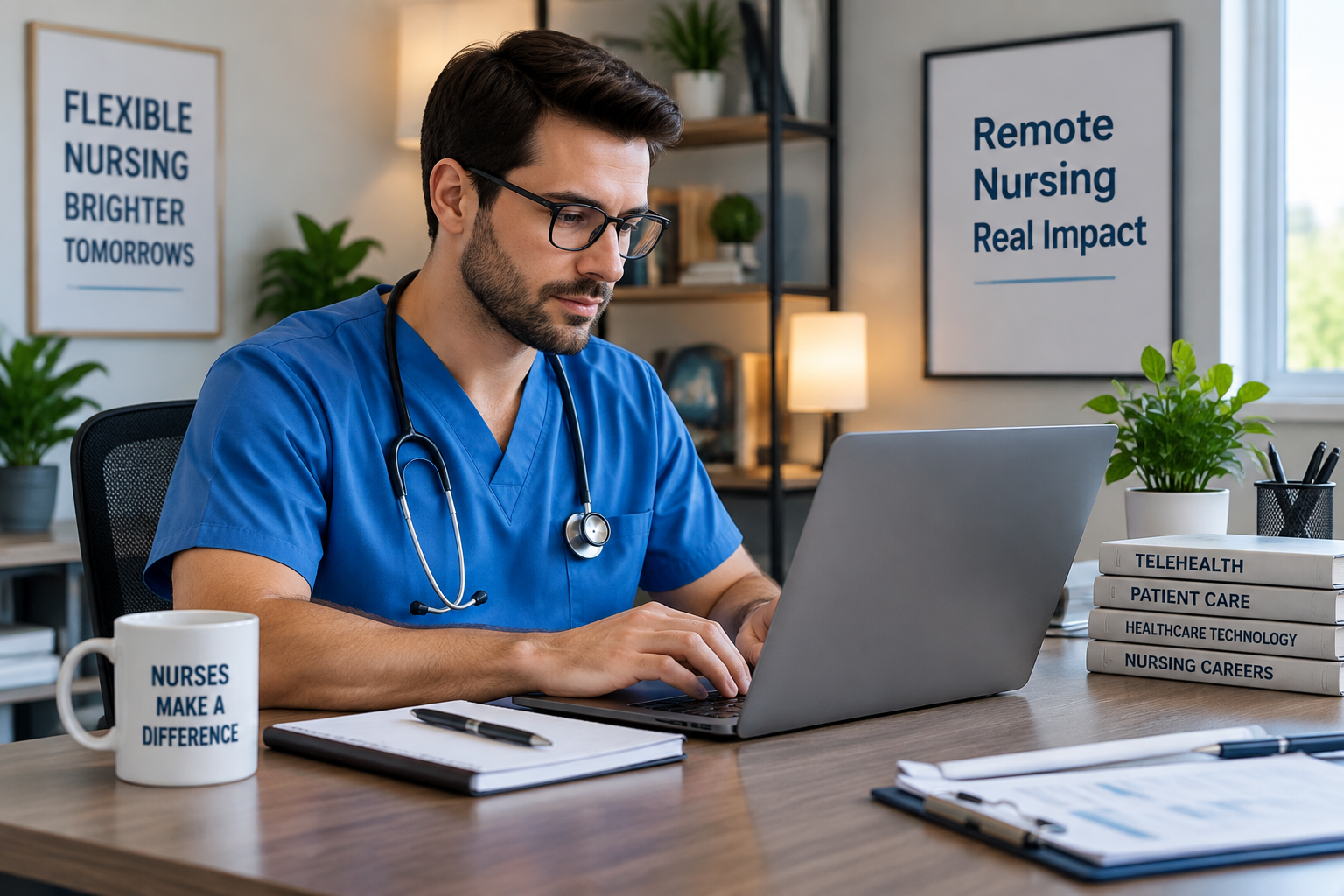
Traditional bedside nursing has always been an essential part of healthcare. Nurses working in hospitals and clinics provide direct physical care and support patients during some of the most important moments of their lives. However remote nursing has created another career path where nurses can continue helping patients while working in a different environment.
The biggest difference between bedside nursing and remote nursing is the way care is delivered. Bedside nurses usually work directly with patients in hospitals, clinics or healthcare facilities. Remote nurses use digital communication tools, healthcare systems and online platforms to support patients from a distance. Both career paths require strong nursing knowledge and a commitment to patient safety. The right option depends on a nurse’s personality, career goals, experience and preferred working style.
| Feature | Bedside Nursing | Remote Nursing |
| Work Environment | Hospitals, clinics and healthcare facilities | Home office or remote workplace |
| Patient Interaction | Direct physical patient care | Virtual communication and digital support |
| Main Responsibilities | Treatment support, monitoring and hands on care | Assessment, education, documentation and coordination |
| Schedule | Often facility-based shifts | Depends on employer and remote position |
| Skills Needed | Clinical skills and patient management | Clinical knowledge plus communication and technology skills |
Many nurses choose remote positions because they want more flexibility while continuing to use their healthcare experience. Others prefer bedside roles because they enjoy direct patient interaction and the fast paced clinical environment. A remote role does not mean less involvement in patient care. Nurses still play an important part in supporting health outcomes through communication, monitoring and coordination.
Skills and Qualifications Needed for Remote Nurse Jobs
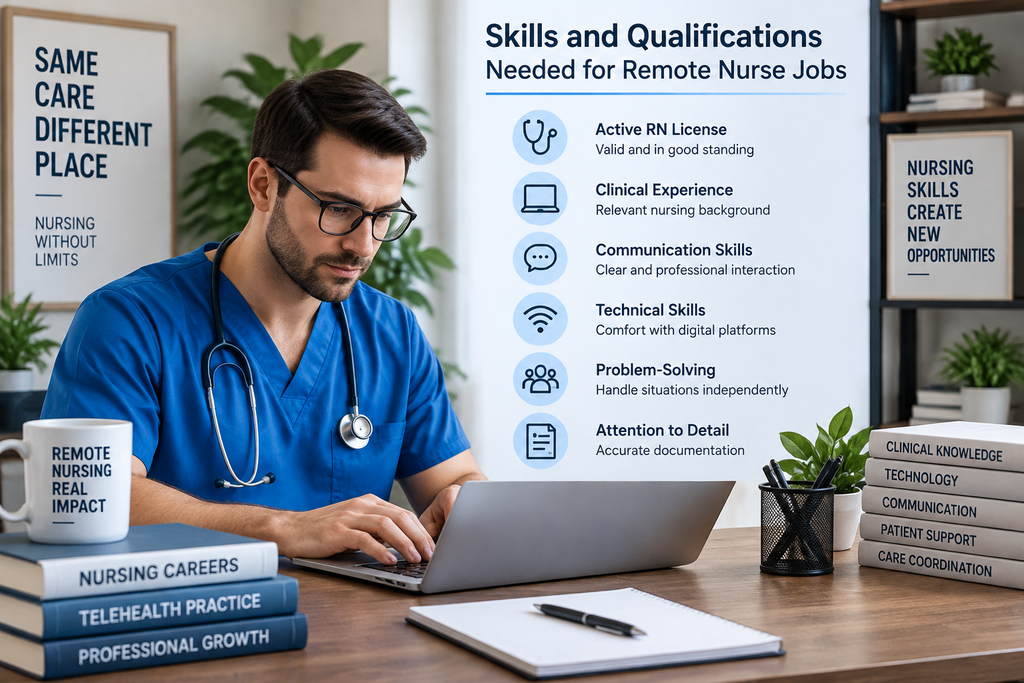
A successful remote nurse needs more than a nursing license. Employers usually look for professionals who can combine clinical knowledge with communication skills, organization and comfort with digital healthcare tools. The exact requirements depend on the employer and the type of remote nursing role. Some positions may require several years of clinical experience while others may focus more on specific skills related to the job.
Nursing License and Clinical Experience
Most remote nursing positions require an active nursing license. Registered nurses often qualify for many remote opportunities because their clinical background allows them to support patients in different healthcare settings. Some roles may require a compact license or additional state authorization depending on where the employer operates and where the nurse lives. Previous clinical experience can be valuable because many remote nurses need to understand patient conditions, treatment plans and healthcare procedures. Experience in areas such as critical care, emergency nursing, primary care or specialty nursing may help nurses qualify for specific remote roles. Licensed practical nurses and licensed vocational nurses may also find certain work from home opportunities depending on employer requirements.
Communication and Technology Skills
Remote nursing requires excellent communication because nurses often interact with patients and healthcare teams through digital channels. A nurse working remotely should be comfortable with:
Healthcare software
Digital documentation systems
Video communication platforms
Patient management tools
Online collaboration systems
Strong documentation skills are also important because accurate records support patient care and healthcare decisions. Remote nurses must be able to work independently, organize tasks and communicate clearly without the constant physical presence of a healthcare team.
How to Transition From Bedside Nursing to Remote Work
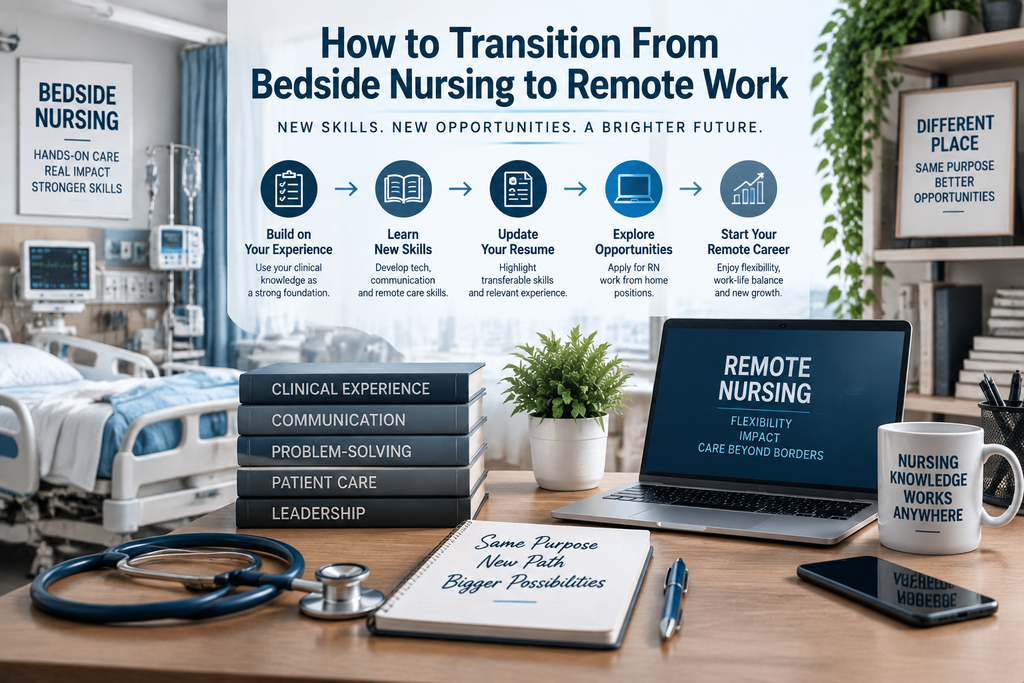
Moving from bedside nursing to a remote role can be a realistic career transition for many nurses. The process usually requires identifying suitable opportunities, improving relevant skills and presenting previous experience in a way that matches remote employers needs. Many nurses already have valuable skills that apply to remote positions. Patient education clinical decision making, communication and documentation are important in both traditional and remote healthcare environments. The first step is understanding which remote nursing role fits your background. A nurse with emergency experience may find triage or telehealth suitable, while someone with strong organization skills may prefer case management or utilization review.
Updating your resume is another important step. Instead of only listing clinical duties highlight skills that are valuable in remote work. Examples include:
Patient communication
Care coordination
Medical documentation
Technology use
Independent decision-making
Healthcare team collaboration
Learning additional digital skills can also improve your chances. Many healthcare organizations use specialized systems for patient records, communication and monitoring. A transition does not always happen immediately. Some nurses begin by exploring part time opportunities, gaining additional certifications or building experience in healthcare roles that involve remote communication. The goal is to show employers that you can deliver safe and effective care even when you are not physically located beside the patient.
Where to Find Legitimate Remote Nursing Positions
Finding legitimate remote nursing opportunities requires careful research. The growth of remote healthcare has created more opportunities, but nurses should always verify employers and job listings before applying. good job search usually begins with reliable sources such as official employer career pages, professional healthcare organizations and trusted job platforms. A remote nursing job board can help nurses discover available positions from different employers in one place. These platforms often allow users to search by specialty, experience level and location requirements. When reviewing a job listing, nurses should check:
The employer’s official website
Required qualifications
License requirements
Job responsibilities
Application process
Location restrictions
Professional job platforms can also be useful because they connect nurses with healthcare organizations looking for qualified candidates. Nurses should be careful with opportunities that make unrealistic promises or request personal information before a proper hiring process begins. A legitimate employer usually provides clear information about the role, expectations and application steps.
How to Apply for Remote Nurse Jobs Successfully
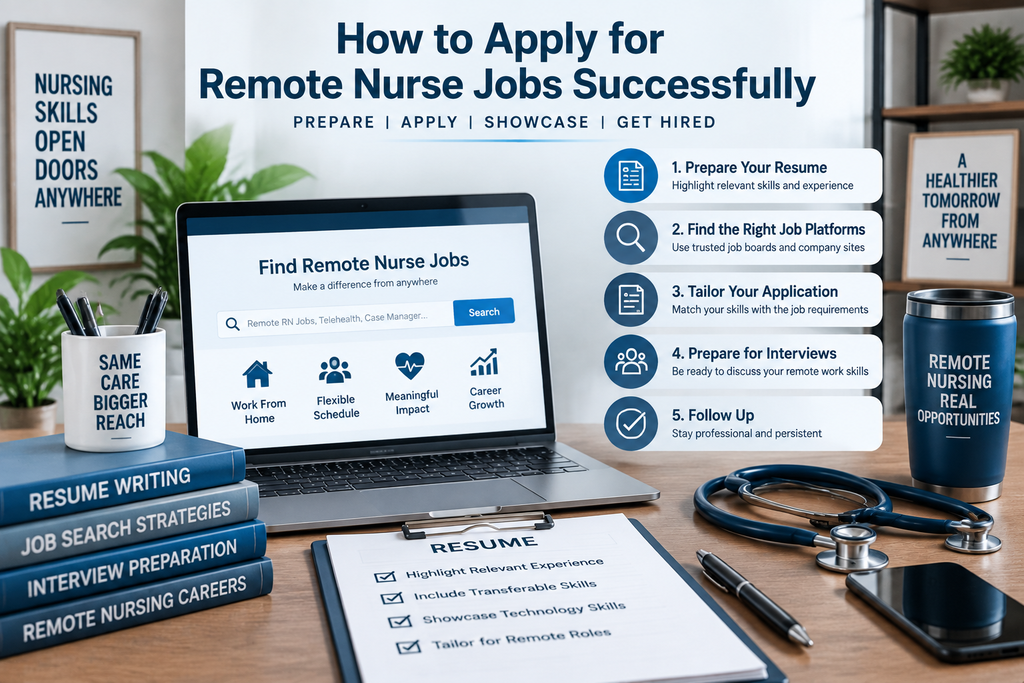
Applying for a remote nurse job requires a focused approach. Many qualified nurses struggle to get responses because their application does not clearly show how their experience matches remote healthcare requirements. Start by reviewing the job description carefully. Identify the skills and qualifications the employer mentions and make sure your resume reflects relevant experience. A strong application should explain how your nursing background supports remote work. For example instead of only writing that you provided patient care highlight experience with:
Patient education
Clinical documentation
Care coordination
Remote communication
Healthcare technology
During the application process, customize your resume for each position rather than sending the same version everywhere. A professional cover letter can also help explain your interest in the specific role and show how your experience connects with the employer’s needs. Preparing for remote interviews is equally important. Employers may ask about communication skills, technology experience and how you manage responsibilities independently. Demonstrating confidence with digital tools and explaining your approach to patient care can help create a stronger impression.
How to Create a Resume for Remote Nursing Roles
A nursing resume for remote positions should focus on skills that show you can succeed outside a traditional healthcare facility. Many nurses have strong clinical backgrounds but fail to highlight the abilities that remote employers value. Your resume should include relevant experience with:
Patient communication
Healthcare documentation
Care coordination
Clinical decision-making
Electronic health records
Healthcare technology
If you have experience supporting patients through phone calls, digital platforms or education programs, include those details. Remote employers also value organization and independent work skills. Explain situations where you managed responsibilities, collaborated with teams or solved problems without direct supervision. Using clear language and matching your resume with the job description can improve your chances of passing applicant tracking systems used by many employers. A well prepared resume helps employers understand how your nursing experience can transfer into a remote environment.
Remote Nursing Salary and Career Growth
The earning potential for remote nursing positions depends on several factors including experience, specialty, employer, location and job responsibilities. A nurse working in a specialized area may have different opportunities compared with someone entering a general remote healthcare role. Factors that can influence salary include:
Years of nursing experience
Professional specialty
Education and certifications
Type of employer
Full time or contract status Remote nursing continues to develop as healthcare organizations expand digital services. Areas such as telehealth, patient monitoring and care coordination have increased the need for nurses who can support patients through remote systems. Career growth depends on continued learning and the ability to adapt to changes in healthcare technology. Nurses who build strong communication skills and understand digital healthcare tools may find additional opportunities as the industry evolves.
Are Remote Nursing Jobs Right for You?
A remote nursing career can be a good choice for nurses who enjoy communication, problem solving and independent work. These roles allow professionals to continue helping patients while working in a different environment. Remote positions may be suitable for nurses who want more flexibility, prefer less physical work or want to explore healthcare careers outside traditional bedside settings. However remote nursing also requires discipline and comfort with technology. Some nurses may miss the direct interaction and teamwork found in hospitals. Before making a transition, consider your personal goals, preferred work style and long term career plans. Understanding your strengths can help you choose a nursing role that fits your professional needs.
Conclusion
Remote nursing has created new opportunities for registered nurses who want to continue using their healthcare skills in a different environment. From telehealth and case management to utilization review and virtual care nurses can choose from many career paths beyond traditional bedside work. Building a successful remote nursing career requires understanding available roles, developing relevant skills and preparing a strong application. Nurses who highlight their clinical experience, communication abilities and technology skills can better position themselves for remote opportunities.
The best approach is to research roles carefully, match your experience with employer requirements and apply through verified sources. Whether you are planning a complete career transition or exploring flexible healthcare options remote nurse opportunities can provide a new way to continue making a difference in patient care.
FAQ’S
Can a registered nurse work remotely?
Yes, many registered nurses can work remotely in roles such as telehealth case management, utilization review and clinical documentation. Requirements vary depending on the employer and position.
What are the best remote RN jobs?
Popular remote RN jobs include telehealth nursing, nurse case management, utilization review, remote triage and virtual nursing roles. The best option depends on experience, skills and career goals.
Do remote nursing jobs require bedside experience?
Some remote nursing positions prefer candidates with bedside experience because it helps nurses understand patient care. However requirements vary by employer and role.
Do I need a compact license for remote nursing jobs?
Some remote nursing positions may require a compact license or additional state authorization. Nurses should always review the specific requirements listed by the employer.
Can LPNs work from home?
Some LPNs can find remote healthcare opportunities depending on employer requirements. Available roles may include patient support, documentation assistance and care coordination.
Who hires remote nurses?
Healthcare organizations, insurance companies, telehealth providers and medical service companies may hire remote nurses for different healthcare support roles.
Are remote nursing jobs fully remote?
Some positions are fully remote while others are hybrid. Nurses should review each job listing carefully to understand workplace expectations.
How do I find legitimate remote nursing positions?
Nurses can search through official employer websites trusted job platforms and professional healthcare resources. Always verify the employer and job details before applying.
